What New Roof Installation Involves, Step by Step
Every new roof installation we run starts with a tear-off down to the roof deck. We strip the old shingle, haul the debris out in a dumpster, and we will not overlay new material over rot we already found.
- Tear-off strips the old shingle, roofing felt, and tar paper down to bare plywood or OSB sheathing.
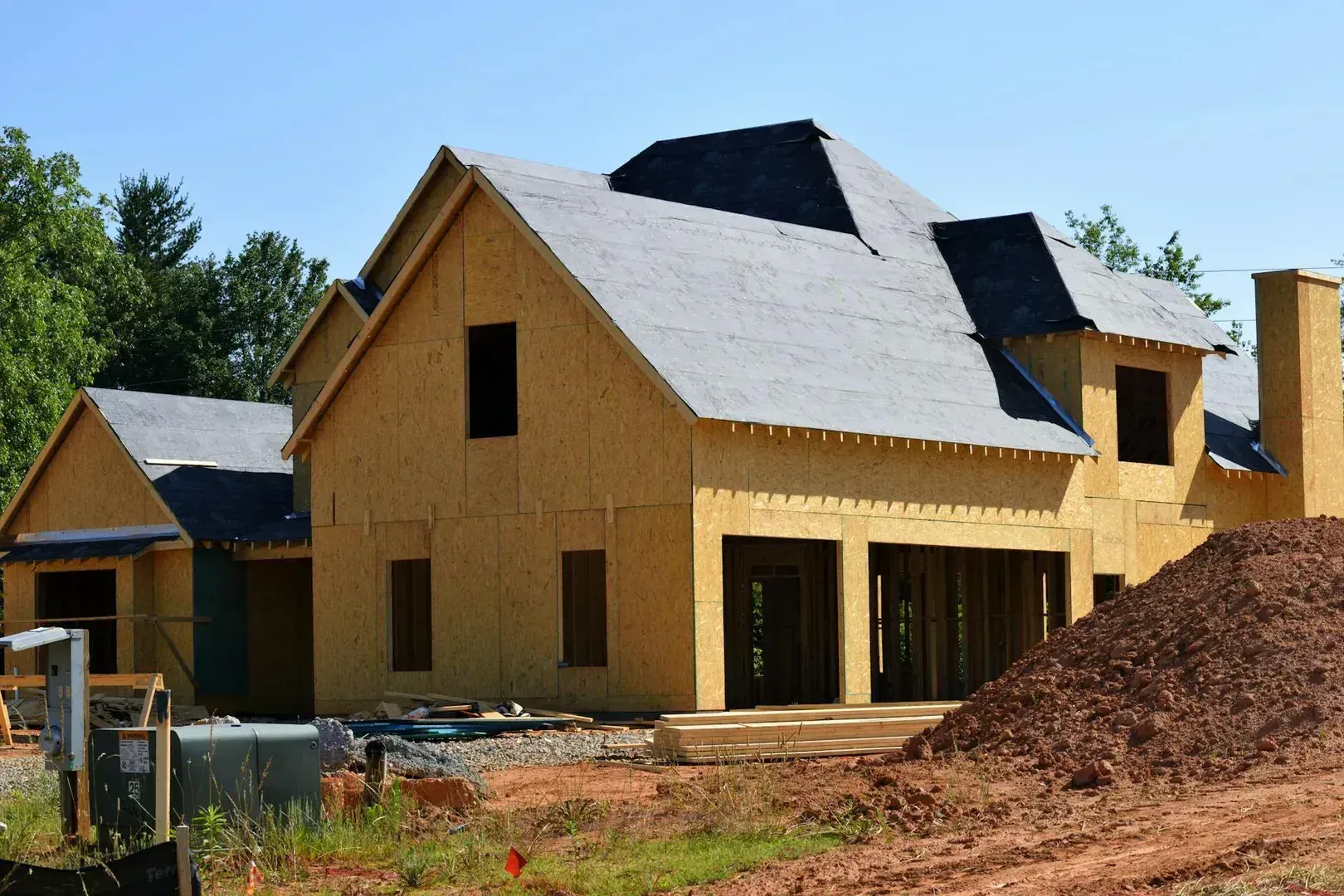
- Deck inspection has a roofer probe the roof deck for rot at the chimney, valley, and dormer, then replace any soft panel.
- Ice-and-water shield is a self-adhered membrane we run along the eave and any section where an ice dam forms.
- Synthetic underlayment replaces felt across the field course and survives a mid-job rainstorm far better.
- Drip edge goes on at the eave and rake, then step flashing, counter-flashing, and chimney flashing are reset with roof cement.
- Field and ridge shingles lay in staggered courses over a starter course, fastened with ring-shank nails, then closed with a ridge cap and ridge vent.
Materials, and Why We Recommend Each One
We quote the material that fits your roof pitch, your budget, and how long you plan to stay. Here is how we walk a Newark homeowner through the choice.
- Asphalt shingle is the default: a heavier architectural shingle outlasts the old three-tab shingle, and GAF, Owens Corning, and CertainTeed all make a comparable line.
- Standing-seam panel and corrugated panel shed snow on steep rooftops, though a metal panel costs more per square.
- Cedar shake, wood shake, slate, clay tile, and concrete tile each bring their own weight, so we check the framing before quoting.
- Modified bitumen and built-up roof cover low-slope runs; TPO, EPDM, and PVC membrane serve a flat rooftop.
- Ice-and-water shield, synthetic underlayment, and vapor barrier sit under everything and do more for waterproofing than the shingle above them.
- Ridge vent, soffit vent, and an attic fan move hot air out of the attic; with fresh insulation, that is where energy efficiency comes from.
What a Roof Inspection Actually Looks For
An inspection is a slow walk of the rooftop, the attic, and the roofline, usually 30 to 45 minutes on a single-family house. We photograph the damage so you see the granule loss yourself.
- Granule loss and end-of-life wear on the field course show how much life the shingle has left.
- Curl, buckle, blister, and missing shingle point to heat stress or wind uplift.
- Rot and decay in the fascia, soffit, and sheathing mean water has been wicking in for a while.
- Sag and settle along the roofline trace back to a rafter, truss, joist, purlin, or ridge beam.
- Corrosion on fasteners, plus chalking and delamination on a flat membrane, is still a repair we can catch.
- Mold in the attic insulation costs more to fix than the flashing that let the water in.
Newark Weather, Ice Dams, and the Work It Changes
Newark sits in a classic ice dam climate, and that shapes what we install.
Freeze-thaw cycles push meltwater under the shingles and into top-floor ceilings, so the ice-and-water shield along the eave does more work here than in a milder market.
Precipitation runs roughly 46-50 inches in a normal year, snowfall averages 26-29 inches a season, and a single nor'easter can drop a foot overnight.
- We add snow guard above a lower roof or entry, because sliding snow off a steep metal panel is a real hazard.
- We check the gutter and downspout at every inspection, since a clogged run backs water up under the drip edge.
- We keep emergency roof repair on call for storm damage, because tarping and waterproofing the same day saves ceilings.
Timelines, Cost Drivers, and Insurance Claims
A straightforward tear-off and re-roof on a Newark two-family usually runs one to three days once materials land, weather permitting. Steep pitch, multiple dormers, or a mansard roofline adds a day or more.
- Roof size, measured in roofing squares, drives most of the price.
- Tear-off layers, since a recover skips that step and costs less but has limits.
- Decking condition, since rotted plywood or OSB sheathing is replaced at a per-sheet rate.
- Detail work at a chimney, skylight, dormer, parapet, or scupper.
- Material choice, since architectural shingle and standing-seam panel are different budgets entirely.
- Building code items like added ventilation or a new drip edge, folded into the line-item estimate.
If storm damage is involved, we document everything before it is touched, meet the adjuster inspection, and give you the figures for the insurance scope and any supplemental claim.